
One birth.
Four answers.
Two BaZi apps, two different charts? Compare four calendar conventions side by side and see exactly which rule changed your Four Pillars.
Compare your chartFree comparison · No account needed
Find the difference.
Enter a birth time once. The table shows the year, month, day and hour pillars for each convention.
Worked example · New York
Four Pillars comparison
| Pillar | Almanac | Early-Zi | Solar-term instant | True solar |
|---|
In highlighted rows, matching letters share the same pillar.
What changed
Why charts disagree.
Calendar conventions can move a pillar at a boundary. Knowing which convention an app uses is more useful than picking a winner.
The free comparison covers the first four boundary types below. Daylight saving and luck cycles are part of the planned report.
This is a calendar comparison. It offers no fortune telling, predictions or life advice.
Where the year begins
Four Pillars uses Li Chun, while some charts start the year at Lunar New Year. The four methods here use Li Chun, with day and instant variants.
Solar-term date or instant
Some conventions switch the month or year on the calendar day of a solar term. Others wait for its precise time.
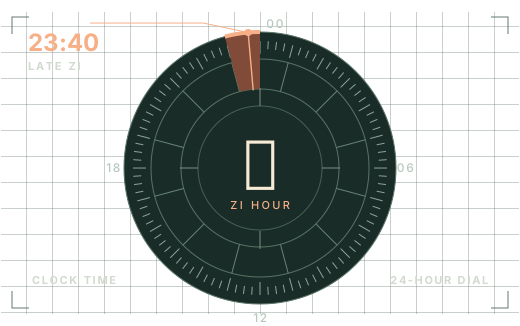
The late Zi hour
Midnight and 23:00 are both established day boundaries. Even the calendar library’s maintainers leave that choice to the practitioner.
Clock time or solar time
Longitude can shift a birth time across a two-hour branch or a solar-term boundary. This comparison uses longitude only.
- Report in preparation
Daylight saving
China observed seasonal clock changes in 1986–91. Most U.S. regions still do. This tool uses fixed offsets and does not adjust for DST.
- Report in preparation
Luck-cycle direction and start
Da Yun calculations can follow different direction and starting-age rules. Luck cycles are outside the free pillar comparison.
Go deeper on the boundary.
The full four-method comparison and explanations are free. A $4.90 one-time report is in preparation for cases that need a closer look.
- Which boundary risks apply to your chart
- Da Yun starting age with early and late Zi conventions
- Minute-by-minute solar-time boundary analysis
- Practitioner checklist and daylight-saving verification
Daylight-saving verification is planned for the report. It is unavailable today.
Get the launch email.
Leave your email for a notification when the report is available.